The Cardboard Archive: What a White Horse Beer Mat Remembers
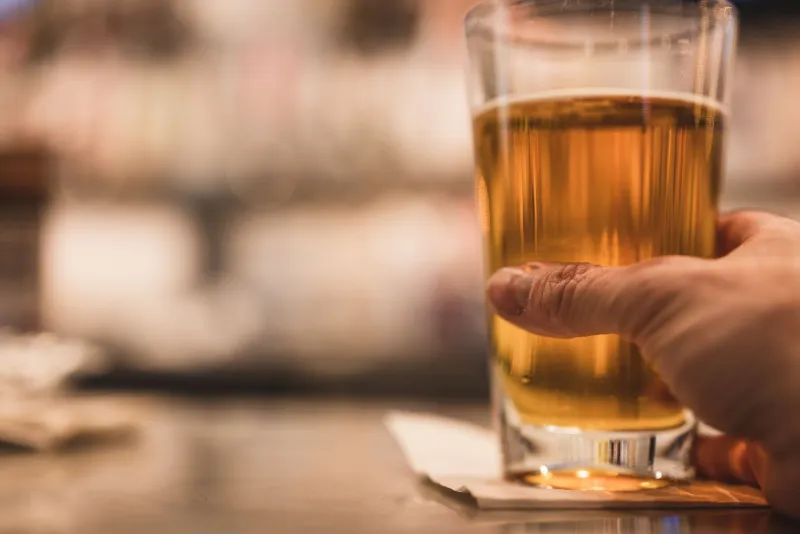
There is a moment, somewhere between ordering and the first sip, when a beer mat does its most important work. It lands on the bar. It absorbs the ring before it forms. It gives your glass a soft place to sit. And then, if the pub is doing its job, it becomes something else entirely: a thing to fiddle with, read, turn over, or slide across the table while a conversation finds its feet.
At The White Horse Bedford, the beer mat is not really décor. It is part of the furniture. It is also, in its own small way, an archive.
The Smallest Publication in the Pub
Most of us read a beer mat without meaning to. A brewery name. A bit of local colour. A slogan that has been through more focus groups than anyone wants to imagine. The best ones feel like a calling card from the bar: here is who made your pint, here is where the pub sits, here is a square of Bedfordshire that has ended up under your glass.
Bedfordshire has a long brewing story, and beer mats have carried fragments of it for decades. Old brewery names, familiar colours, the kind of typography that looks like it belongs on a delivery van from another era. Some designs are purely practical. Some are quietly handsome. A few are so plain they loop back round to being interesting.
What makes them work is scale. A beer mat has room for one idea. It does not try to tell you the whole history of the town. It just puts a name, a mark or a memory in front of you while you are waiting for the next round. That is a very pub-sized way of doing things.
Etiquette Beneath the Glass
There is an unwritten code to the beer mat, and regulars know it without ever discussing it. The mat goes under the glass, not beside it. You do not peel the corner unless you are nervous, and even then you try to be subtle about it. If the mat has been placed on the bar by someone who knows what they are doing, you leave it there. Moving it is a bit like rearranging someone else’s cutlery before dinner.
Then there is the matter of the spare mat. One under the pint, one nearby for the next drink. It is a small act of anticipation, the kind of thing that makes a bar feel looked-after. In 2026, when so much of daily life is designed to be frictionless and invisible, there is something reassuring about a system you can see. Glass. Mat. Bar. Pint. Repeat.
And yes, the mat has a social life. It becomes a coaster for a phone, a temporary scorecard, a place to write a name, a prop for a story. It gets folded into quarters by someone making a point. It gets tapped with a finger during a debate about football, or gravy, or whether the next round should be a half. It is the pub’s answer to scrap paper, and it is always within reach.
Collectors, Casual and Otherwise
Not everyone sets out to collect beer mats. Most collections start by accident. A mat gets slipped into a coat pocket because it has a good design. Another follows from a trip somewhere. Suddenly there is a shoebox in a cupboard, and the shoebox has opinions.
At The White Horse, the collectors tend to be casual about it. They are not cataloguing with white gloves. They are the people who notice when the design changes, or when a local brewery has refreshed its look, or when an old mat turns up at the back of a drawer. The pleasure is in the recognition. A beer mat can date a memory more precisely than a photograph, because it is the sort of thing you only keep if the day meant something.
There is also a quieter kind of collecting: the conversation. A mat from a Bedfordshire brewery can start a chat about a lost pub, a family pint, a match-day ritual, a first date that went better than expected. The cardboard is just the prompt. The real archive is the table talk around it.
Why Cardboard Still Counts in 2026
It would be easy to write off the beer mat as a relic. Pubs have apps, card readers, QR codes and enough screens to make a 1990s arcade feel restrained. But the mat has survived because it does a job no screen can do. It is absorbent, disposable, cheap and immediately useful. It does not need charging. It does not ask for a review.
More than that, it is part of the texture of a proper pub. A bar without mats feels slightly unfinished, like a table without salt. The mat says someone expects you to stay for a drink. It says the pint matters enough to protect the wood beneath it. It is a small signal of care, and in a local pub, small signals add up.
At The White Horse, the humble square of cardboard will keep doing what it has always done: catching drips, starting conversations and holding a little bit of Bedford under your glass. You can call it ephemera if you like. Regulars will just call it the thing that stops the ring on the bar.
Either way, it is worth a second look before the next round arrives.