Below Stairs, Above Standard: The Quiet Craft Behind a White Horse Pint
The door before the bar
There is a stretch of the day at The White Horse when the pub is at its most honest. The chairs are still upside down, the lights are half on, and the only sound from the bar is the low hum of the cellar. Long before anyone orders a pint, someone has already opened a door, checked a gauge, pulled a sample and made a small decision that will shape your first sip.
That is the bit drinkers rarely see. A good pint is not simply poured; it is looked after. The cellar door is the start of the story, not a mysterious cupboard where beer goes to get cold. As we head into winter 2026, it feels like a good time to celebrate the quiet work that happens below stairs.
Temperature is not a vibe
Cask ale is often described as being served at cellar temperature, which sounds vague until you stand in a proper cellar. It is cool rather than freezing, usually somewhere in the low teens. That is deliberate. Chill a good bitter too hard and you flatten the malt, mute the hops and turn a pint with character into something merely cold and fizzy.
Lager and keg beers have their own colder setting, but the principle is the same: temperature should serve flavour, not hide it. The next time a pint tastes a little dull, it may not be the beer. It may be that it has been kept too warm, too cold or moved about when it wanted to settle. In a good pub, thermometers and schedules do the work so customers never have to think about it.
The lines do the quiet lifting
Beer lines are the motorway between cellar and glass. They are also a place where yeast, sediment and residue can gather if nobody pays attention. A sensible pub cleans its lines on a regular schedule, flushing them through with the right cleaning solution and then rinsing carefully. It is not glamorous. It is not something anyone photographs for the wall. But a clean line is why a pint tastes of malt and hops rather than yesterday’s washing-up water.
There is a stubborn myth that line cleaning leaves beer tasting of chemicals. Done properly, it does the opposite. The chemicals clean; the rinse removes them; the beer arrives as it should. If a pint ever tastes fusty or soapy, say so politely. A good bar team would rather know than let a bad glass go out twice.
Cask care: a living product with a short diary
Cask ale is a living thing. It is not a sealed, pasteurised product that sits patiently for months. Once a cask is vented, tapped and allowed to settle, it has a working life. Staff check clarity, condition and aroma. They decide when a cask is ready and when it has had its day. That is why the best real ale pubs sometimes run out of a beer rather than keep serving something past its best.
A cask also needs a little patience. It needs time to settle after delivery. It needs the right temperature and the right amount of venting. It needs someone to taste it, not because the staff are helping themselves, but because quality control is part of the job. When a pint arrives with a neat head and a clean, bright flavour, that is not luck. It is a diary of small checks being kept.
Glassware: the last three feet
A beer-clean glass is not just a glass that has been through a dishwasher. It is a glass with no detergent film, no lingering lipstick and no greasy fingerprint around the rim. Those things can kill a head and flatten flavour. In a proper pub, glasses are washed, rinsed and left to drip-dry. The tea towel is for the bar top, not the inside of your pint glass.
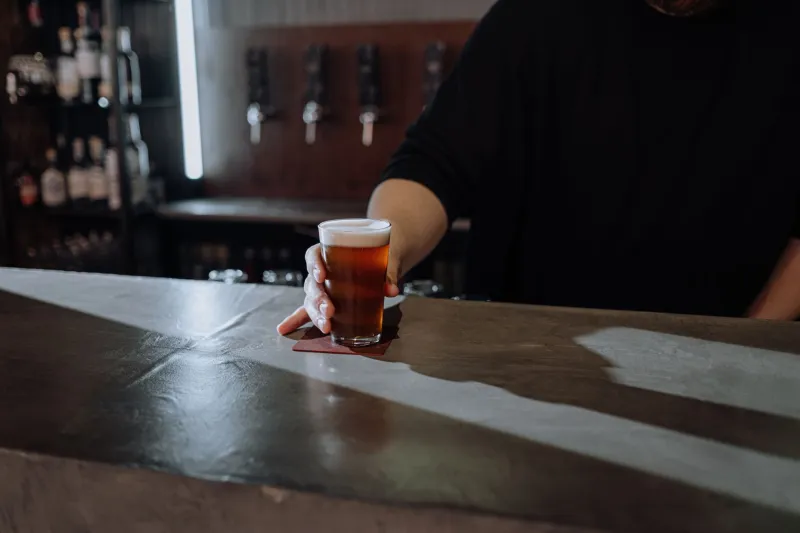
The pour itself matters too. A good pint is pulled with a bit of care, allowed to settle and topped up without panic. A generous head is not a scam; it is part of the presentation. A sparkler may change the texture of a beer, but it should not be used to disguise a badly kept line. The last three feet from cask to table are where all the earlier work becomes visible.
The myths worth retiring
A few pub misconceptions deserve a quiet retirement. The cellar is not just a fridge. Colder is not always better. A big head does not automatically mean a fresh pint. Real ale is not supposed to be flat and warm. And line cleaning is not a box-ticking exercise that ruins the beer; it is the reason the beer tastes like beer.
None of this is meant to turn a pint into homework. The point is simpler: there is craft in the ordinary. A well-kept pint is a small act of hospitality that starts with a cellar door and ends at your table.
Why it matters in Bedford
The White Horse is not trying to reinvent beer. It is trying to serve it properly. That means respecting the old routines: the cellar check, the clean line, the settled cask, the rinsed glass. It means treating a pint as something worth looking after, whether it is a midweek bitter or a winter warmer.
So next time you are at the bar and the cellar door swings open, have a glance. There is a whole quiet process back there. You will not see most of it, and that is the point. You will just taste it.